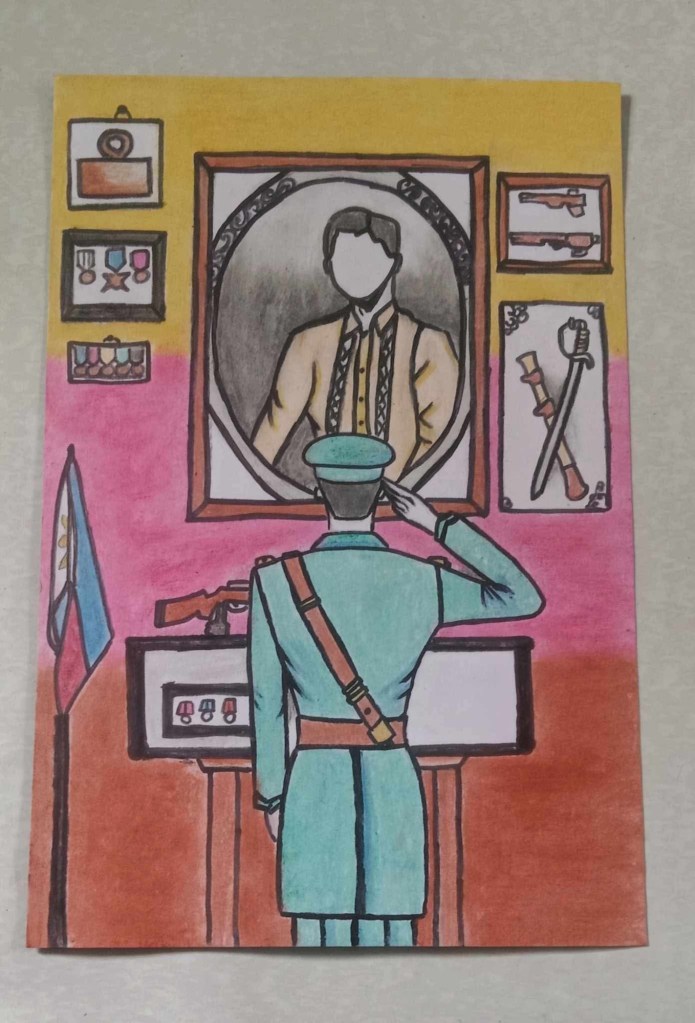
Exploring the symbolism and emotional resonance of “Apo on the Wall,” which shows a soldier paying tribute to a portrait assumed to be a late war veteran. A straightforward artistic approach symbolizes an important tribute to those who both lived and died through sacrifice that will persist forever. This paper analyzes patriotism along with military service while studying portrait symbols including uniform and weapons to explore dual thematic aspects of duty and historic links to present times.
In the poem, memory is pivotal as it preserves and perpetuates the legacy of authoritarianism. The speaker recalls a photo of their father’s boss, Apo, on the office wall, which symbolizes workplace hierarchy and power dynamics. This memory isn’t just passive, it call to mind emotions like fear and respect due to Apo’s intimidating look. It has deeply impacted the speaker’s view of authority.
Apo, symbolizing Ferdinand Marcos, represents an authoritarian force that commands obedience and respect. The father’s strict behavior and devotion to Apo reflect how power controls and serves as a reminder of constant surveillance, reinforcing the idea that power maintains control through fear, authority, and loyalty extending their influence even into private lives and public lives. His obedience shows how powerful leaders manipulate fear to maintain dominance, ensuring people feel watched and compelled to comply.This is how power, when rooted in intimidation and loyalty, extends its reach far beyond politics and into the personal lives of citizens.
Apo on the Wall by Bj Patino also reflects the connection between power, fear, and discipline in Filipino history and culture. Set during the Martial Law era, the poem shows how authority was not just respected but feared, as seen through the eyes of a child who notices the framed picture of “Apo” watching over everything. In Filipino culture, respect for elders and leaders is important, and children are taught to follow rules without question, much like how the father in the poem enforces discipline. However, the poem also highlights how this respect can turn into blind obedience, where fear is used to maintain control. This reflects how many Filipinos during Martial Law had no choice but to submit to authority, even if they didn’t fully understand why. The poem serves as a reminder that history shapes the way people think and behave, challenging the idea that respect should come from fear. Instead, it encourages reflection on leadership, power, and the lasting impact of a time when silence was safer than speaking out.
In summary, Apo on the Wall by Bj Patino explores the connection between memory, power, and terror, and how authoritarian control affects both individual lives and society. The poem highlights how authoritarian control and blind obedience are maintained through fear, evident in how devoted the father is to Apo, a symbol of power and control. Set during the Martial Law era, it reflects how respect for authority in Filipino culture can turn into forced submission, shaping how people perceive leadership. The poem serves as a reminder that history influences the present, challenging the idea that respect should be built on fear rather than trust
 Site Title
Leave a comment